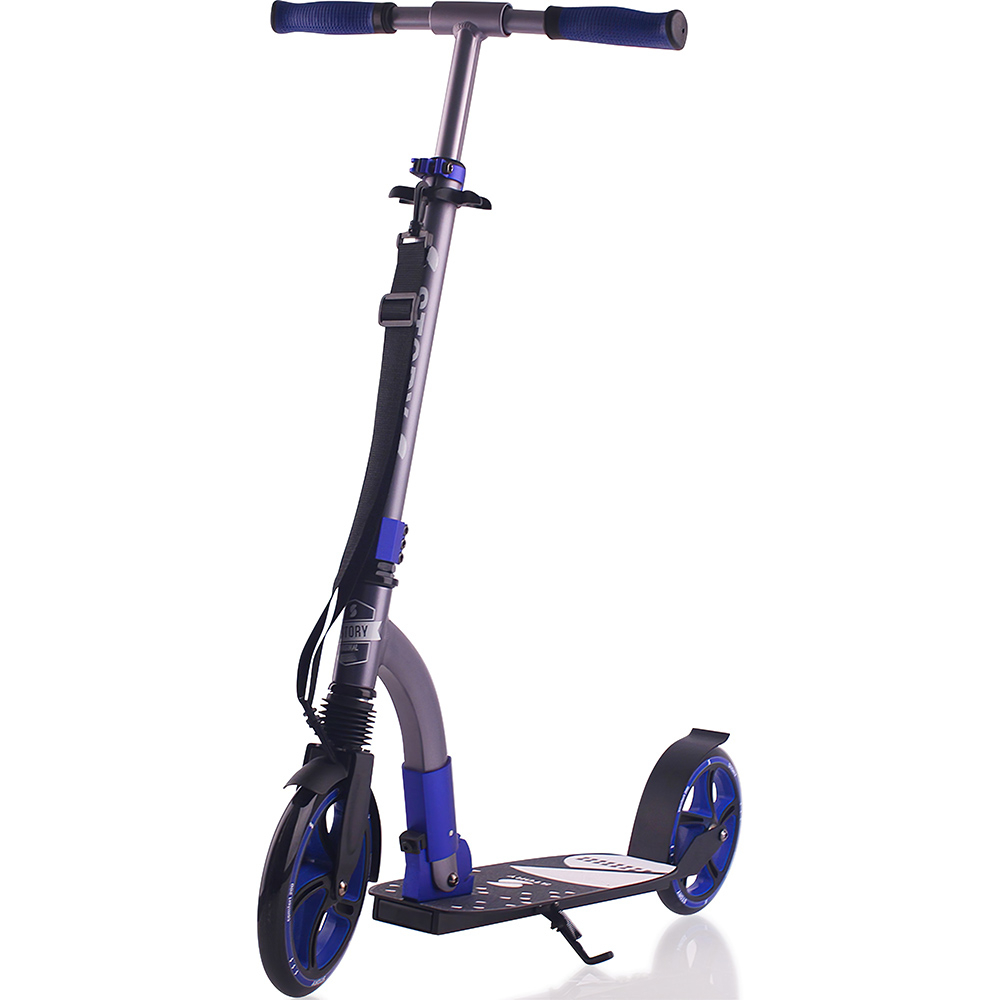
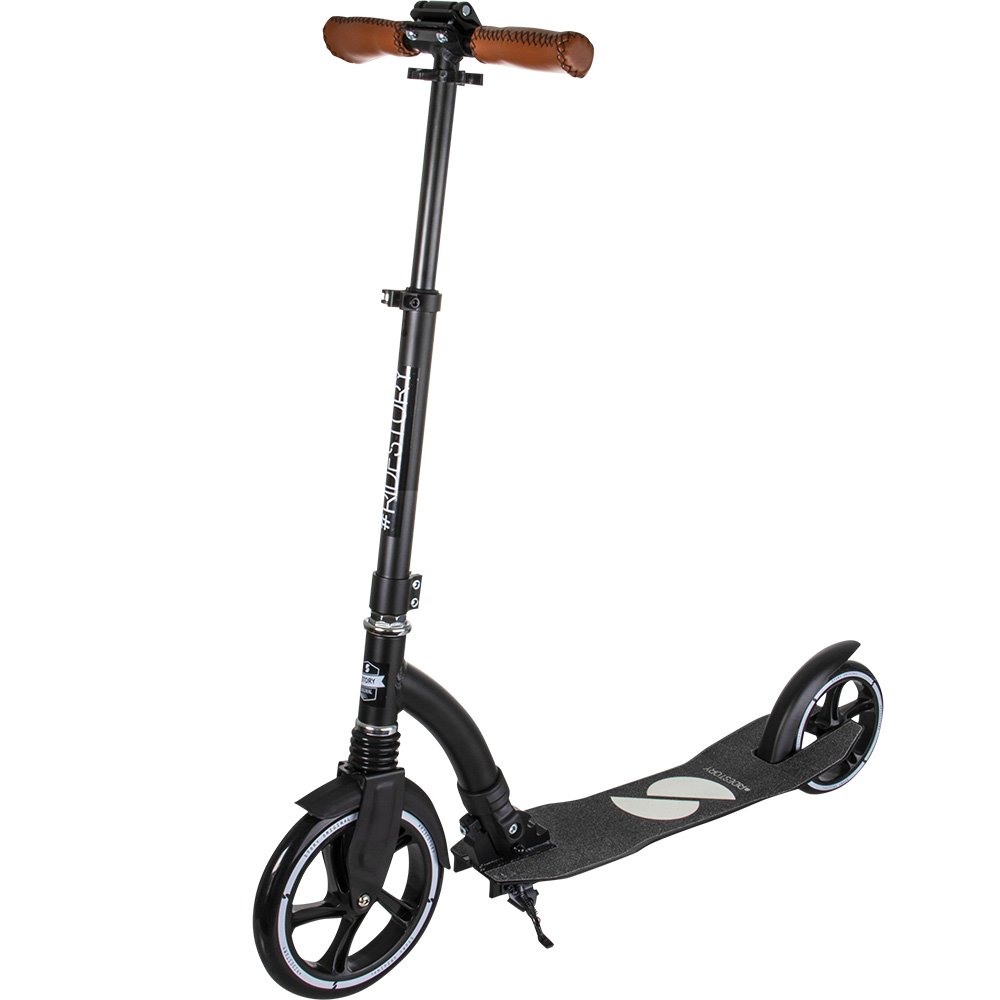
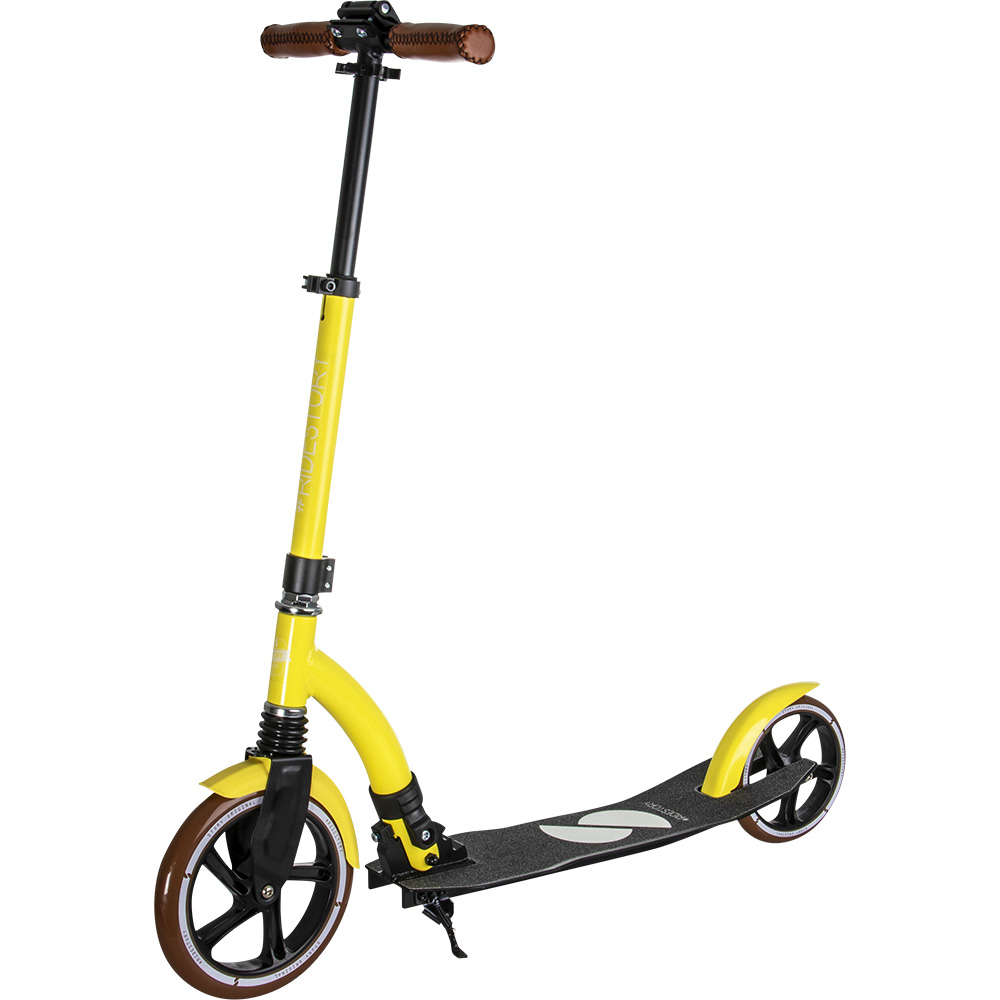
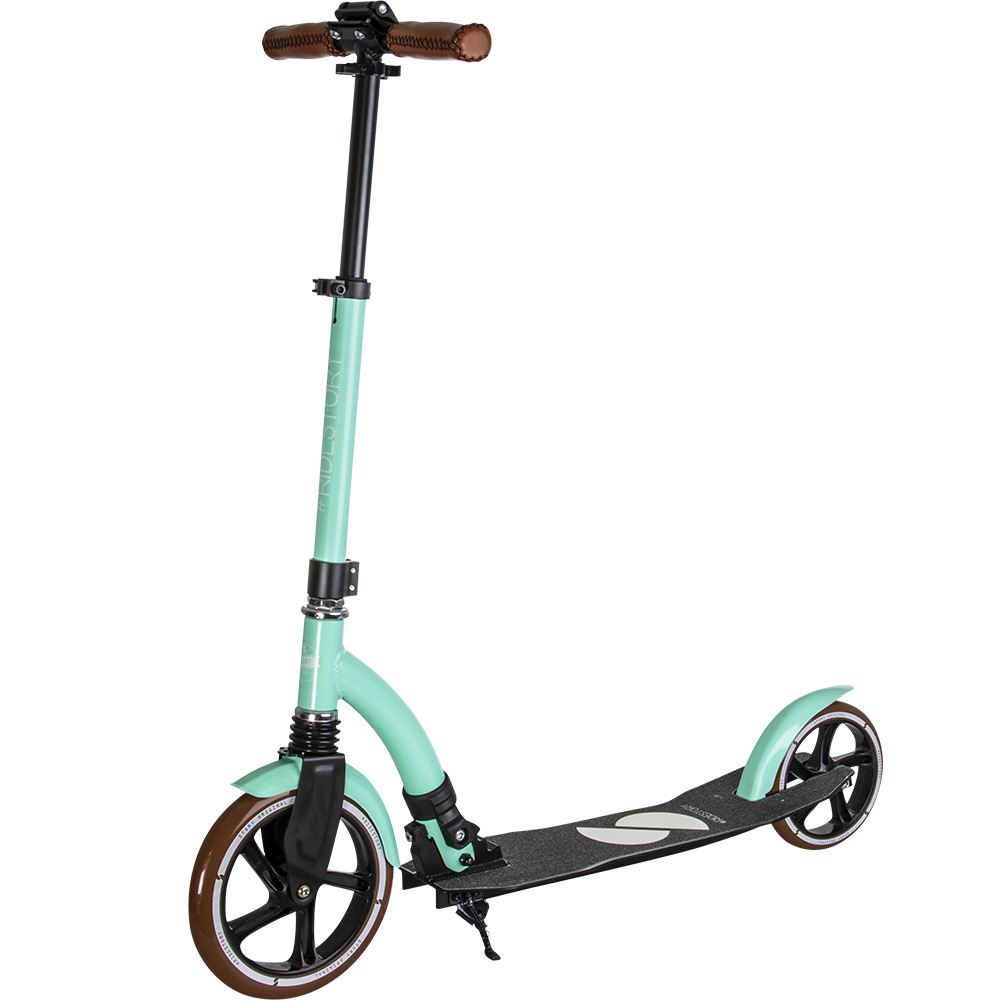
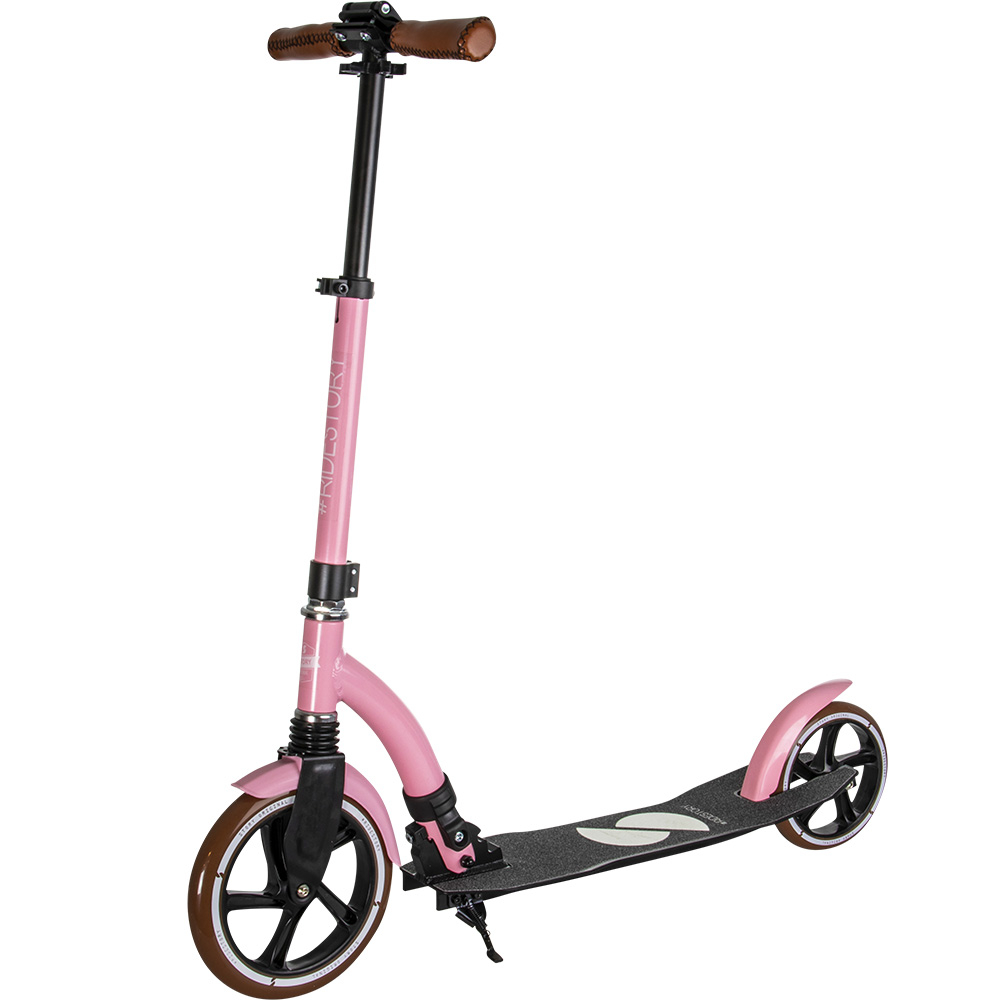
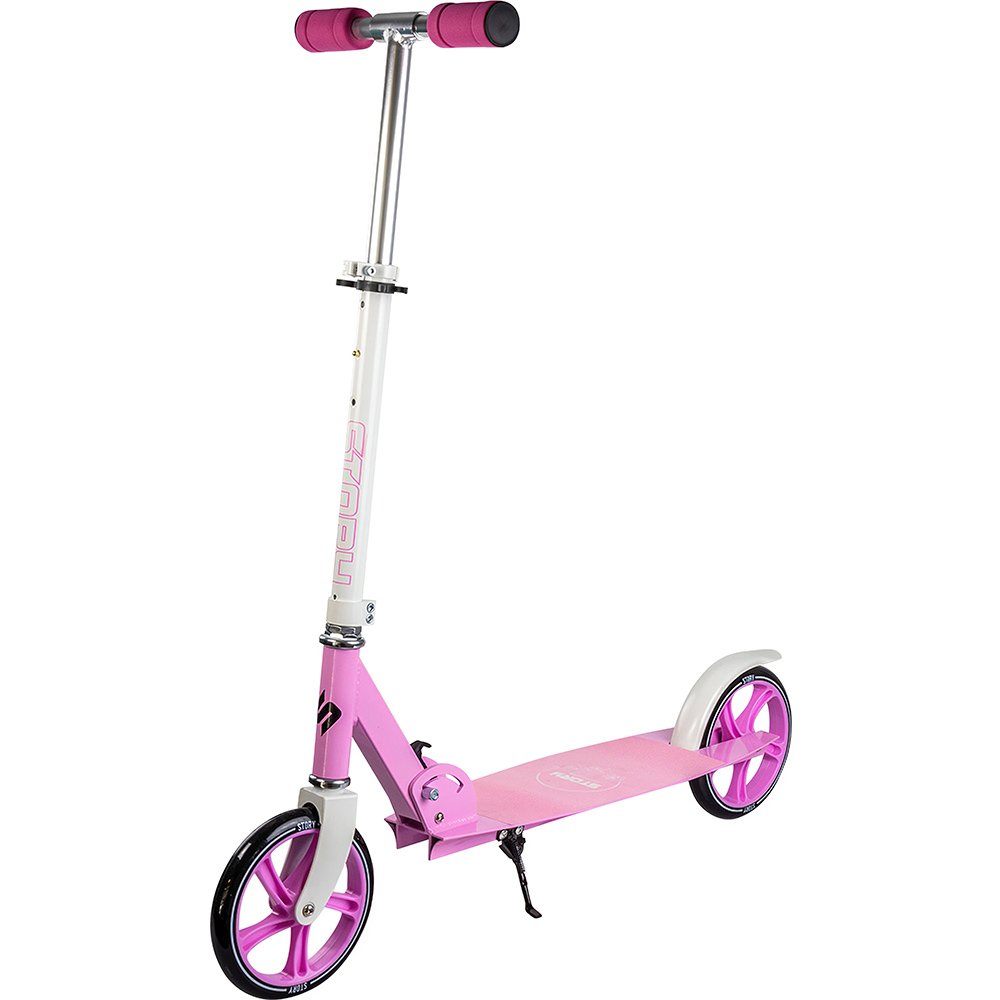
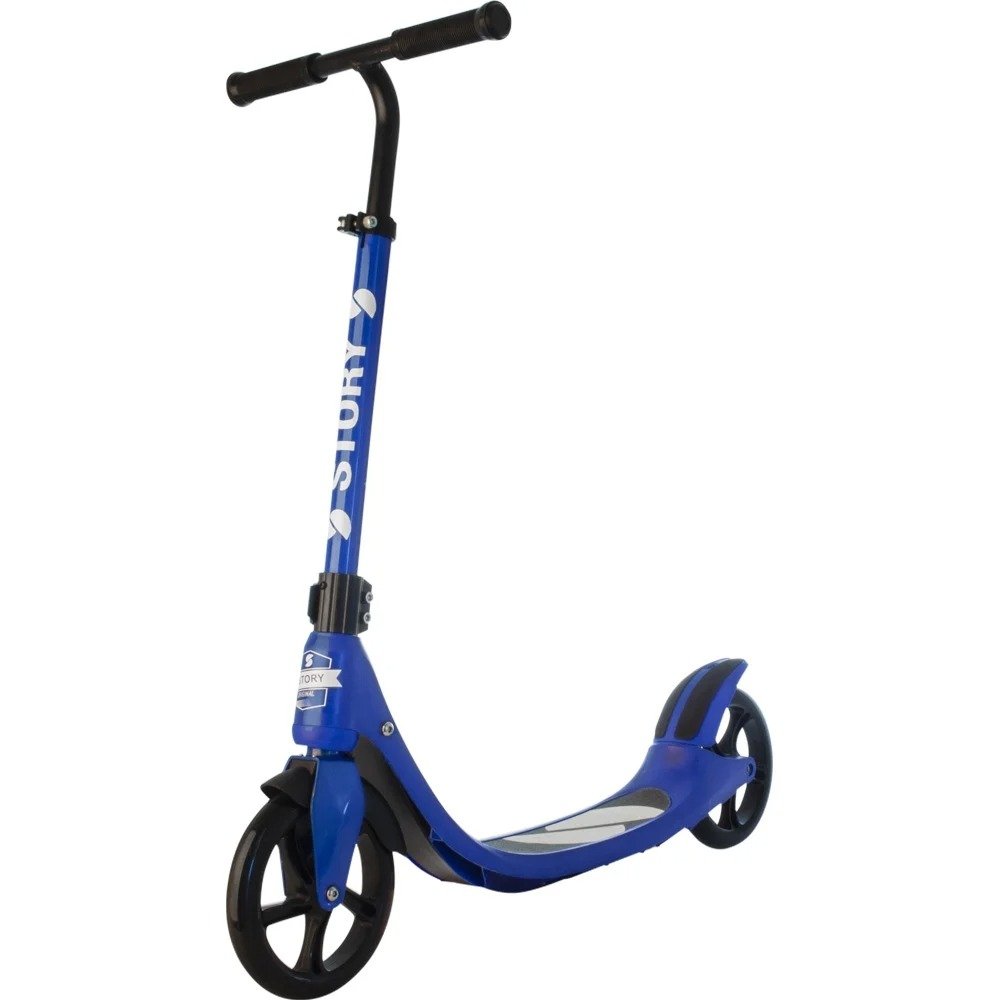
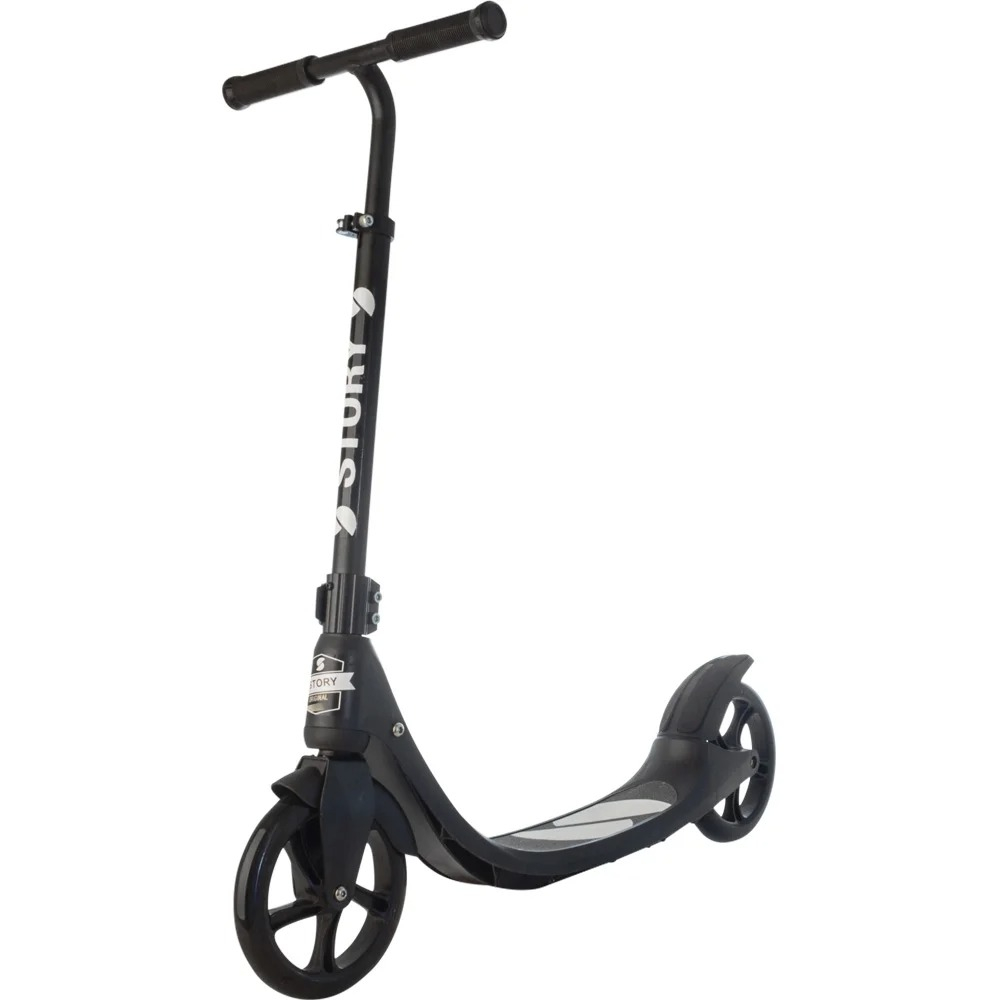
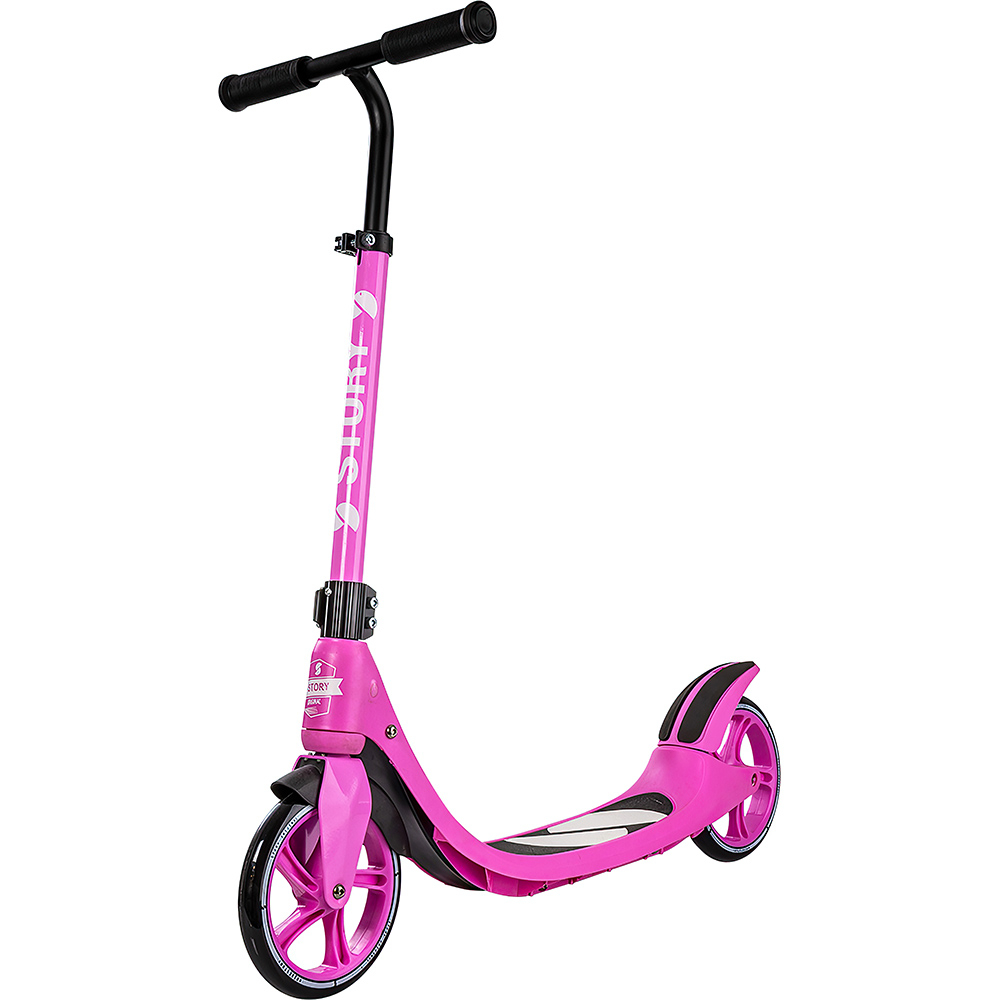
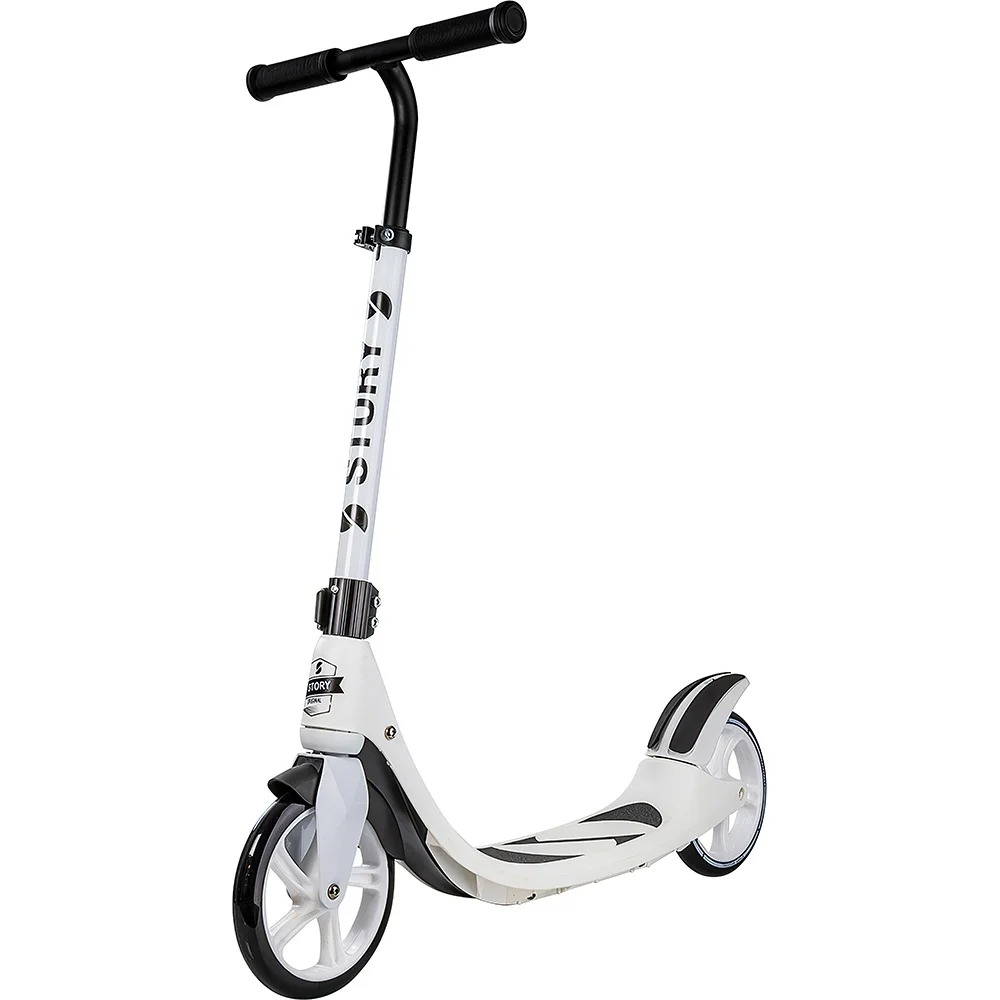
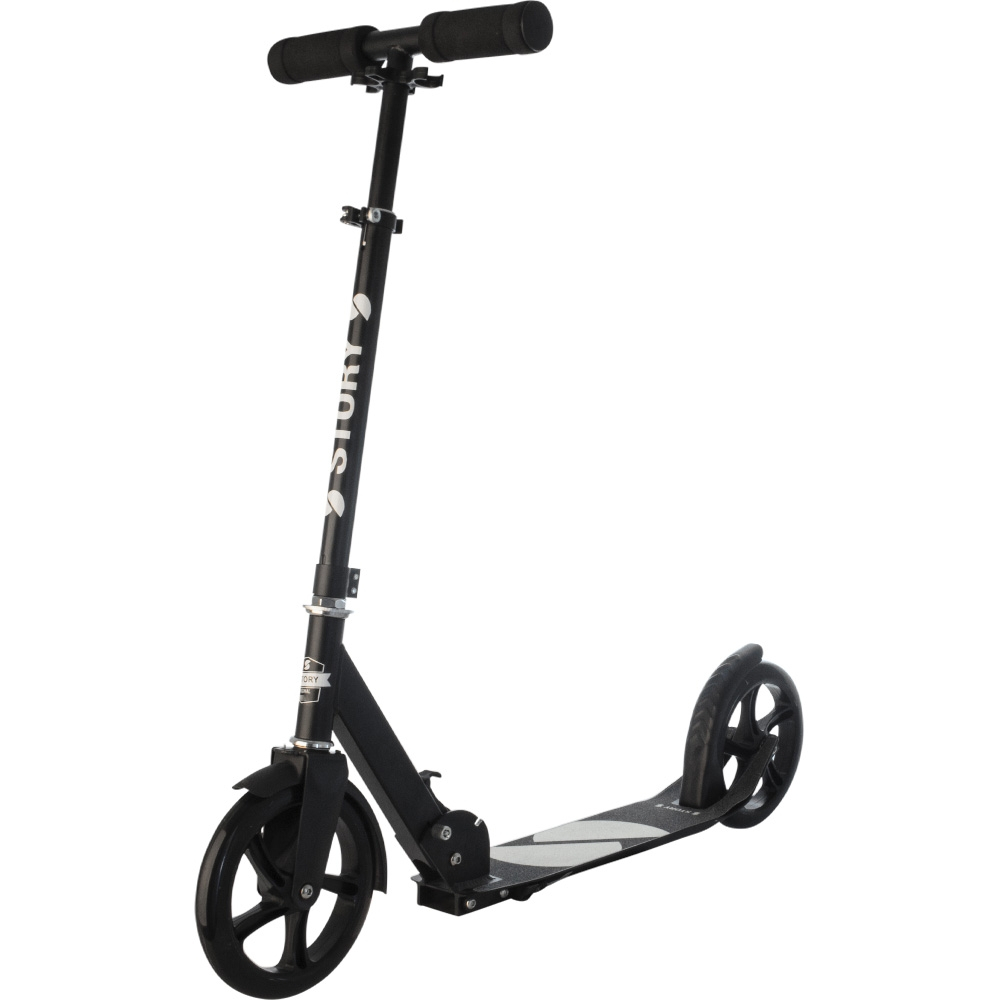
Fast Ride is a transport scooter made of aluminum, which is an extremely light material and therefore helps that your scooter will be much lighter in weight, and thus also really fast to ride on. Story has clearly done a fantastic job in producing a perfect transport scooter for adults and children of very high quality. In addition, the deck on the Fast Ride scooter is wide, so there is plenty of room to ride stably with both feet standing on top when driving fast through the streets.
With light, soft and large wheels of the size 200mm, this transport scooter for adults and children can run unaffected across the many bumps that can occur on your trips. Story has also developed the wheels itself and found a solution that provides the best possible speed, comfort and driving pleasure. In addition, the wheels have ball bearings of ABEC-7, which means very high quality level, and will let you drive at a really good speed, as well as accurately follow your movements at turns and turns. Never has it been so easy and felt so wonderful just to turn right or left.
So why not try your hand at this beast of a transport scooter for adults and children? And thereby get to your many destinations both faster and easier in an equally fun way. You will quickly find the joy and freedom of owning an adult scooter for transportation as you quickly get driving down the streets and on the paths to work or school. The Fast Ride transport scooter is at least already assembled and ready to go in the second your need should arise!
365 days right of return If you order online at EuroSkateshop you always have 365 days right of return.
No Brexit Fee
As a British registered company we deliver your packages as usual without unexpected tax or customs charges. ALL prices include VAT and Customs Duty. EORI #: GB 369 530 275 000.
Size Guide for Commuter Scooters and Kids' Scooters
When choosing a scooter for commuting or for children, it's important to find the right height to ensure good comfort and control. Here are our recommendations:
Enter your total height in CM
User Height
Recommended Scooter Height
Less than 100 cm
65 - 70 cm
100 - 110 cm
69 - 72 cm
110 - 120 cm
71 - 75 cm
120 - 130 cm
74 - 77 cm
130 - 140 cm
76 - 80 cm
140 - 150 cm
79 - 84 cm
150 - 160 cm
83 - 88 cm
160 - 170 cm
87 - 94 cm
170 - 180 cm
93 - 100 cm
180 cm +
95 cm +
Recommended Height:
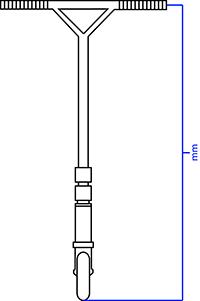
We recommend that the total height of the scooter (from the ground to the top of the handlebar) be between the user's hip and the bottom of their chest.
Please see our illustration for a visual example:
Adjustable Scooters:
Most commuter scooters and kids' scooters have adjustable handlebar height.
Under the specifications of each product, you can see both the minimum and maximum height settings, allowing you to easily determine whether the scooter fits your child - or multiple users in the family.
This allows the scooter to grow with the rider and ensures optimal use over time.
Especially for Younger Children (2 - 6 years):
Younger children often prefer lighter scooters - e.g., made from aluminum or plastic.
This information is also available under the product's specifications.
“Broomstick Method” - Find the Right Height:
A simple and effective method to find the perfect height is the “broomstick method”:
Hold a broomstick horizontally in the air in front of you.
Place it at the height where you'd like the handlebar (typically around hip height - but it depends on personal preference).
Measure the distance from the broomstick to the floor.
Add approx. 5 cm - as you are raised off the ground when standing on the scooter itself.
Example:
If you measure 70 cm from the broomstick to the floor, add 5 cm - 75 cm is the optimal total height of the scooter.
Important to Know:
Commuter and kids' scooters are designed with adjustable height because they are not subjected to the same stress as stunt scooters.
Stunt scooters, on the other hand, must be 100% fixed and therefore cannot be adjusted in height.
Street riding with a stunt scooter is all about creative expression and technical skill in the city's raw and unpredictable environments. It primarily takes place on streets, stairs, rails, curbs, and urban skateparks – in short, everything the public space has to offer.
This discipline places high demands on both the rider and the equipment. Street scooters are typically built with a stronger and more durable construction, often with wider decks and solid components that can withstand repeated hard landings and the wear from concrete and metal. This robustness gives you both confidence and freedom to challenge yourself – whether you're a beginner or an experienced street rider.
Street is not just about tricks – it’s a lifestyle and a way to express yourself. You choose the lines and obstacles, and only your imagination sets the limits for what you can do with your scooter in the urban landscape.
Park Machine
Park riding with a stunt scooter usually takes place in skateparks filled with ramps, boxes, rails, and bowls. Here, you get a controlled and varied environment, making it ideal for practicing new tricks, building confidence, and developing your technical skills.
In the skatepark, it’s all about smooth lines, big airs, and precise landings. Park scooters are often lighter and more maneuverable, so you can easily pull off spins, flips, and aerial combos. The ramps allow you to learn quickly and push your limits as your skills progress.
Don’t have a skatepark nearby? Then bring your training home! With an NKD ramp, you can practice both indoors and outdoors – whether you're just starting out or already building your trick repertoire. There are plenty of ramp models available, giving you the opportunity to train with focus and fun, wherever you are.
Park riding is both play, sport, and a creative way to express yourself – and there are always new tricks to master.
Level
Choose the right scooter for your level
When choosing a trick scooter, it's important to match it with your skill level. We’ve made it easy for you by dividing our scooters into three levels:
Beginner to Professional
Ideal for those starting from scratch – but with ambitions and wanting a scooter that can keep up all the way to the highest level. Here you get a setup built for progression, durability, and high performance.
Beginner to Intermediate
Perfect for the beginner who wants to learn quickly and take the next step. These scooters are easy to control, stable, and designed to develop your skills safely – from the first jumps to more advanced basics.
Beginner to Advanced
A great choice for those who are either completely new or have some experience – and want a scooter that can grow with them and handle tougher tricks, bigger jumps, and more intense use without compromising on quality.
No matter which level you choose, you can be sure your scooter has been carefully selected to give you the best start – and support you all the way through your progression.
Strength
The strength of a Stunt Scooter
The strength of a Stunt Scooter determines how much wear and stress it can withstand – and therefore how suitable it is for different types of riding and skill levels. To make it easy for you, we've rated all our scooters on a scale from 0 to 5 stars:
★ 0–1 stars: Light use / Beginner
Scooters in this category are suitable for kids and beginners who mainly cruise and practice light tricks. They are lightweight and easy to handle, but not built for hard landings or intensive use.
★★★ 2–3 stars: Good strength / Intermediate riders
Here you'll find scooters with reinforced parts and increased durability. They can handle more advanced tricks and daily use at the skatepark, and are a great choice if you're progressing your skills.
★★★★★ 4–5 stars: Maximum strength / Heavy riding and street
The most robust scooters – built for riders who ride hard and often. Ideal for street riding, big drops, and intense trick training. The components are designed with durability in mind, so you can fully rely on your setup.
The higher the star rating, the more extreme and durable the scooter – so you can choose the one that fits your style and skill level perfectly.
Lightweight
Our assessment of Lightweight
Our assessment of lightweight is not just about the total weight – but about how light the scooter is within its category. A solid street scooter can still be considered light for its class if it’s built using quality materials, thoughtful design, and strong yet lightweight welds.
That’s why we rate all our scooters on a scale from 0 to 5 stars:
★ 0-1 stars: Heavier construction in its class
Focus here is on maximum strength and durability rather than weight. Ideal for heavy use – but heavier compared to similar models.
★★★ 2–3 stars: Medium weight in its category
A good balance between strength and weight. Made with standard materials and reliable build quality – typical weight for the level and riding style.
★★★★★ 4–5 stars: Top-level lightweight for its type
Made with optimised materials such as high-strength aluminium, heat-treated alloys, and weight-reducing design. This gives you a scooter that feels significantly lighter than others in the same category – without compromising on durability.
A high lightweight score makes the scooter more responsive, easier to control, and ideal for technical tricks – all assessed based on what is considered lightweight for that particular type of scooter.
Grinds / Slides – rated from 0 to 5 stars
A scooter's ability to perform well in grinds and slides depends on several factors: the width and shape of the deck, grind rails, surface smoothness, as well as materials and durability. With our 0 to 5-star rating, you can easily see how suitable a scooter is for this type of riding.
★ 0–1 stars: Not suitable for grinds
These scooters are not designed for grind tricks. They typically have narrower decks without special protection or glide-friendly surfaces and are not recommended for riding on rails, ledges, or curbs.
★★★ 2–3 stars: Light grind usage possible
Scooters in this category can be used for some slides but are not optimized for it. They are better suited for beginners who want to try grind tricks on a smaller scale.
★★★★★ 4–5 stars: Optimized for grinds and slides
These scooters come with grind-friendly decks – often with box ends, flat bottoms, and reinforced wear zones. The materials are selected for low friction and high durability, making it easier to glide smoothly and safely on rails and edges. Perfect for street riders and technique-focused riding.
A high Grinds/Slide score means the scooter is built to withstand and perform under repeated grinds – giving you the ability to develop your skills with maximum control.
Handling / Responsivity – rated with stars from 0 to 5
Handling and responsivity describe how precisely and directly the scooter reacts to your movements – especially during tricks like spins, manuals, and jumps. A scooter with high responsivity gives you full control over your movements and a close connection between the steering and the deck, which is crucial for things like 360° spins and technical landings.
We rate Handling / Responsivity from 0 to 5 stars:
★ 0–1 stars: Loose and imprecise steering
There may be play between the bar and the fork or in the compression system, which creates an imprecise feel. Less control during tricks and rotations – not recommended for advanced riding.
★★★ 2–3 stars: Standard response and steering
Acceptable steering and stability for everyday use and basic tricks. Good for beginners, but with limited precision during technical maneuvers or at high speeds.
★★★★★ 4–5 stars: Direct and precise steering response
High build quality, stiff compression, and a tight connection between the bar and the deck. Instantly reacts to your movements and provides an intuitive feel in the air. Soft wheels and a solid construction also ensure controlled, smooth landings – ideal for spins, combos, and high-level park riding.
The higher the Handling / Responsivity score, the more precise control you get – giving you a better riding experience and the ability to progress your tricks with confidence and safety.
Bouncy Foam Deck – rated from 0 to 5 stars
The Bouncy Foam Deck rating shows how soft, cushioned, and trampoline-friendly the deck is. A key feature for trampoline scooters, this foam padding helps protect your feet during repeated tricks and allows for longer, safer training sessions.
★ 0–1 stars: Hard or minimal foam padding
Decks in this range offer little shock absorption. They feel more like standard hard decks, which can be harsh on your feet during repetitive use and not ideal for trampoline trick practice.
★★★ 2–3 stars: Moderate foam comfort
These decks include some foam padding, giving better comfort and cushioning. Suitable for occasional trampoline practice and beginner riders looking for a mix of realism and safety.
★★★★★ 4–5 stars: Maximum bounce and impact protection
The highest-rated decks have thick, soft foam that offers excellent grip and absorbs impact during trick landings. Perfect for advanced riders who train often and need a deck that supports intensive sessions while reducing foot strain.
A higher Bouncy Foam Deck score means a softer, more comfortable surface that helps you stay safe and focused while mastering new tricks on the trampoline.
Street
Street is the term for street riding with your scooter. Street is a concept of street driving with your scooter. It means cruising in the street or in the skatepark, performing stunts of all kinds - only your imagination stops you here. Street is the most used form of driving within stunt scooters and often places great demands on the design and quality of the scooter. A robust construction allows you to withstand any challenge the street may throw at you, as well as feeling more confident about yourself when you are on an adventure, whether it's the first time you're out or you've done it 100 times before.
Ramps
Ramps = riding on ramps. You often ride ramps to learn how to perform new tricks with your stunt scooter. This gives you faster self-confidence on the scooter and in general! You often find ramps on skater rinks. However, should you not be so lucky to have such nearby, we recommend that you acquire one of our NKD ramps, which allows you to practice anywhere inside and outside. There are endless models within ramps that you can ride your stunt scooter on and it's a great way to unfold and become really talented.
Slide
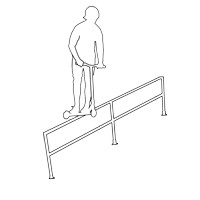
Slide, also known as Grind is the term for tricks that are performed by sliding on something. For example, it could be a tube, a handrail, a staircase, yes, basically anything you can think of. With the right scooter everyone can learn how to slide. It just requires you to be aware that the deck of your stunt scooter has a grind base ie. cuts that allow you to slide on things. This driving form is very popular and you can do it with your friends anywhere.
Transport
Transport refers to the scooter's ability as a means of transport. How well did it get you from A to B and how easy is it to bring along with you? Transportation via scooters has become popular in many European cities in recent years, whether it's for school or work. It is also super smart on holidays where the bicycle is too big and inconvenient, as good transport scooters often can be folded and carried over the shoulder.
Quality
Quality. This is an expression of our professional assessment of the scooter as a whole. This is based on the materials, construction, performance and estimated life of the scooter. With a high rating here, you have acquired a super good scooter that is worth showing off.
CE-Certified
If a product is CE-certified, it means that the product complies with EU law in relation to common requirements and conformities for this type of product. A CE-certified product has been through a number of tests and passed all of them adequately. Therefore, you can be sure of a higher quality and safety when purchasing a CE-certified product.
Safety Test – EN 14617
EN 14617 is a comprehensive safety standard for scooters that covers essential aspects such as material quality, durability, braking performance, and resistance to outdoor conditions. This test ensures that the scooter can withstand everyday use and remains safe and reliable for riders weighing between 20–100 kg. It is one of the most thorough certifications available in the industry, giving you extra confidence in your scooter’s construction and safety.
Read the full test here.
Safety Test – EN 71
EN 71 is a European safety standard specifically designed for toys, including kids' stunt scooters. It ensures that the product meets strict requirements for mechanical safety, chemical composition, and overall child safety. The test evaluates the scooter for potential hazards such as sharp edges, small parts, and toxic substances, ensuring it is safe for children to use. A scooter that meets the EN 71 standard offers parents peace of mind, knowing it is built for safe and responsible use by young riders.
Read the full test here.
SGS-Certificate:
An SGS certificate is a confirmation of a product's quality and integrity performed by SGS - known globally for certifications and professional product testing.
Products with a CE-mark issued by the SGS certification service indicate that these products have gone through a number of different tests and testing methods, which are in accordance with various requirements and standards these product classes / groups must comply with. Furthermore, an SGS certificate confirms that every single part of the product has been tested to the utmost to ensure an incredibly high quality of durability and functionality.
Each product is part of a product class or product group, each with its own CE-marking ID number. This ID number can be used by you as a consumer to legitimize the certification and find further information about what the product you are buying is approved for.
Total height:
The total height of the entire scooter. There is no right or wrong in relation to height of a scooter. Generally one can say that low scooters are oriented to technical tricks, whereas high scooters are for transport and comfort. Some scooters can be adjusted to suit you and your needs.
Weight:
The total weight of the scooter when it is complete. Heavier scooters are often made of a material, such as steel, which increases the durability and longevity. Where scooters made of lighter materials, such as aluminum, is lighter as well as easier to transport along with you. Whether you should choose one or the other depends on how much you are willing to spend and what you will be using the scooter for. A scooter does for example need to be able to stand through most and it would therefor be clever to buy it in a durable material.
Max Load:
Max load is the manufacturer's recommended load of weight on product. This set out for their knowledge and assessment of the product so that the service life is not reduced.
Deck design:
There are three types of deck design: one-piece, two-piece and foldable. One-piece decks are very durable since they are made of welded parts, whereas two-piece decks are put together with bolts. The advantage of two-piece decks is that they are often able to fold, and some models have headtubes which gives the possibility for different angles. A foldable design makes it possible to fold the scooter together so that it can be quickly taken under the arm or on the shoulder.
There are many different functions and systems for foldable scooters. If you need your scooter for commuting between the bus, train, car or just for getting around, a fast and easily foldable system is an advantage. You will quickly experience that this feature makes a difference whether you use your scooter to take with you on the trains, buses, etc.
Deck material:
The deck of the scooter is usually made of aluminum, as it is a very lightweight and durable material. The aluminum is relatively soft, therefore, it will be mixed with other metals. Aluminum is divided into alloys in which the value is determined by the mixture of metal. Higher alloy provides more durable product material.
Material strength grade:
The strength of aluminum is measured in tons, how many tons the aluminum is pressed under. A scooter deck of T4 aluminum is produced under 4 tons of pressure, where T6 means that it has been pressed under 6 tons. The more tons the metal has been pressed under, the stronger the scooter.
Deck length:
The total length of the deck's surface. The length of the deck decides how much space you have for your feet on the scooter. The longer a deck, the more space you have to stand on, where the shorter a deck, the less space you got to stand on.
Deck width:
The total width of the deck's surface. The width decides like the length of the scooter's deck, how much space you have to stand on for your feet. An example of width would be if you could have both feet next to each other on the scooter's deck surface or not. Besides that you need to have enough space to accelerate without losing your balance.
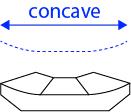
Concave:
Concave is the inward curvature of deck's surface. It helps to lock your feet firmly to the deck and thus providing a better grip, so you avoid losing balance and falling off as easy. The concave curvature is measured on the scooters deck and is measured in degrees.
Suspension:
A scooter suspension works in the same way as with cars. Movement between the scooter and its wheels is allowed. This contributes to a much higher quality scooter than one without any suspension, and gives you a significantly better riding experience on all your trips. For scooters suspension can be built by the front wheel and the rear wheel. Most often, the most expensive quality scooters have suspension on the front wheel, while the even more expensive ones have on both wheels.
Compression:
The compression system is the system that keeps your fork tightly to the headtube of the deck and reduces the slack that all scooters will suffer from the time they are being used. Thus is it with scooters and thus is it with everything actively used outside.
Fork:
Forks can be divided into two main groups: one-piece of two pieces. One-piece forks is molded or cut from one piece of metal, it gives the fork fewer weak points compared to two-pieces forks which is composed of several parts. Furthermore, the forks can be divided into forks with or without thread. Threadless forks requires a compression kit.
Headset type:
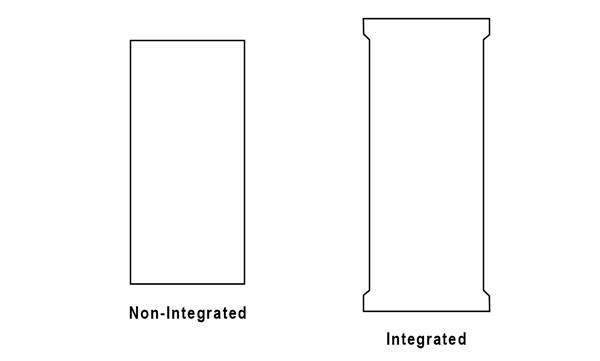
The headtube of the deck determines which headset-type the scooter is using. An integrated headset is more protected and durable than a non-integrated headset. A non integrated headset sits inside the headtube, therefore it is more fragile than the integrated headset.
Bar material:
Steel is a very strong and a durable material. Bars made of steel is very strong, but also much heavier than bars of aluminum. Steel bars caters more for scooters driven hard. Such scooters would be stunt scooters, which have to take a lot of hard impact when performing tricks. It is therefor a clear advantage if you buy your stunt scooter in a durable material. Furthermore, if you are interested in a scooter bar that combines both strength and lightness, a titanium bar is the best option. Titanium is a super strong material with an incredible durability, which unlike steel does not weigh much. What this partly means is that with a titanium scooter bar you get the lightness as with aluminum and the strength as with steel.
Bar height:
The total height from the bottomof the bar to the middle of the handlebar. it is recommended that the height of the bar fits the rider. Some scooters can be adjusted by you to fit your height, while other scooters comes in fixed heights, where you then will have to pick the one most suitable for your height. The reason for this is that a stunt scooter needs to be able to take punches during tricks, so if the bar is adjustable on your tricks scooter, it will become weaker and possibly give you trouble, when performing tricks.
Bar width:
Different widths of bars suits different riding styles. With air tricks you have far more control of the trick with a wide bar, a narrow bar is better suited for technical tricks. Thus, the bar's width have to suit your skills, and it may therefore be worth considering what the scooter primarily will be used for.
Clamp size:
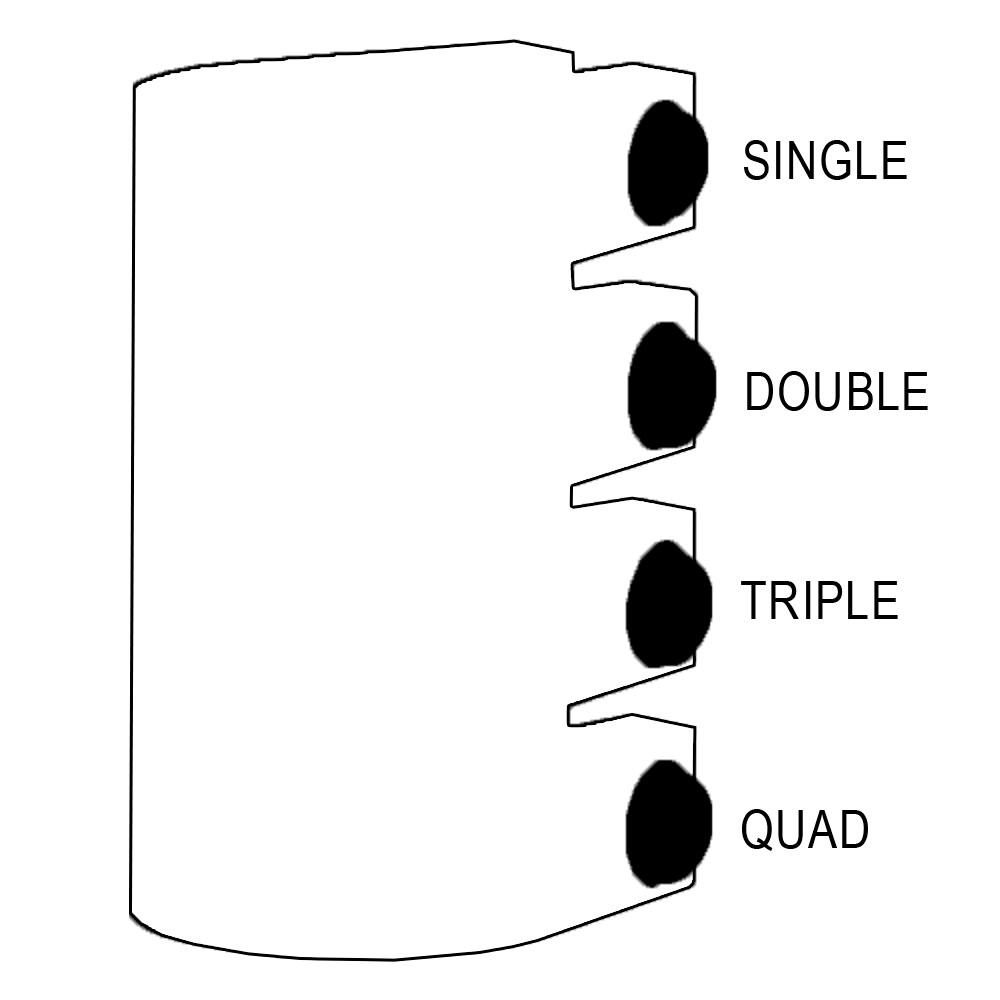
The clamp size of the clamp depends on the number of bolts the clamp is tightened with. Therefore what goes is that the more bolts the larger the size of the clamp, and so too it goes that the fewer bolts used on the scooter, the smaller the size of the clamp.
Outer diameter:
The bar's outer diameter is what determines the type of clamp which will fit. Thus it is recommended that the bar's outer diameter fits the clamps inner diameter. Note however that some clamps can be used in both standard bars and over sized bars.
Inner diameter:
The bars inner diameter determines the fork that fits. Whether it is a one-piece fork or a two-piece fork depends on what you imagine yourself using the scooter to. The smart thing about a two-piece fork is that it often can be folded together, which can be practical for carrying with you on the bus or the train, where with a one-piece fork the great thing is the durability, which makes it perfect for stunt scooters.
Wheeldiameter:
The size of the wheels should depend on your riding style. If you have a lot of focus on the driving experience with good flow and speed, go for bigger wheels, whereas choosing smaller wheels if you go for quick response and better control. However, it is important that the diameter of the wheel fits with both the front fork, deck and brakes.
Wheel hardness:
The hardness of a wheel is measured on the durometer scale that goes from 0 to 100 A, where 0 is the softest and 100A is the hardest. Harder wheels last longer and run faster, but are less comfortable on uneven grounds than soft wheels. Softer wheels do however wear away faster, but have a good grip and are perfect for parks and indoor use.
Core material:
Aluminum and nylon wheels each have their qualities. Aluminum wheels are the strongest but nylon wheels are the lightest. Whether it should be the one or the other depends mostly on your choice for what you will use the scooter for. It is smart to have stronger wheels for outdoors tranportation and if you want to do tricks.
Wheel design:
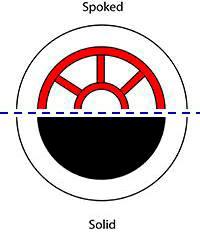
There are different core designs: solid and spoked. Solid core wheel is relatively heavy wheels for scooters, but their weight also provides a lot more durability and strengthens the wheels. Spoked wheels are lighter wheels for scooters, which therefore leads to a less durable and strong wheel.
Wheel profile:
What a flat profile does is it provide the absolute best and highest possible grip for scooters to achieve, where as what the narrower profile does is that it allows a lot more speed. The fork shape must match properly with the scooter wheel's profile.
Bearings:
Bearings are divided into ABEC. High ABEC values mean that the bearing is made with more precision and therefore better quality. It is recommended that your ABEC-value is high for higher speeds and lower if your wheel have to take a lot of impact, like the impact you would expect if you decide to use it for tricks.
Brake type:
There are different brake types- bolt, spring and flex fender brake. Bolt and spring brakes make more noise, so if you want more silent brakes you should go for flex fender brake, however this will cause the wheels to have a slightly and overall lessened longevity.
Axle length - Front:
The length of your scooter wheel shaft is good to have if you need to order pegs or spare parts. The front wheel axle is typically slightly shorter than the back.
Axle length - Back
The length of your scooter wheel shaft is good to have if you need to order pegs or spare parts. The back wheel axle is typically slightly longer than the front.
Features:
Features are some special or additional features and elements a product may contain. This may, for example, be that a scooter is equipped with several systems for braking, an adjustable bar, side stands and a carrying strap to make it easier to carry your scooter. In addition, features can also be smart design choices that your scooter got - for example, whether it is CNC-cut or whether it might be electrically driven.
Assembly:
Almost ready to run or ready to run. Always check the scooter before use, and be aware that it is different, how you receive your scooter. if your scooter is coming complete, it is completely ready for use, whereas if it is only partially complete, then there will be few parts that need to be tightened and assembled, which must be done with standard tools.





 Always climate compensated shipping